10 Signs you need a mold inspection:
Wondering about the signs you need a mold inspection? Corpus Christi’s Gulf Coast humidity, salt air, and hurricane season make local homes far more mold-prone than houses in drier parts of Texas. Mold doesn’t always announce itself with a visible black patch on the ceiling, but often it hides behind drywall, under flooring, or inside HVAC ductwork for months before anyone notices. By the time it’s obvious, the infestation is usually much larger than it looks.
Here are 10 warning signs that may indicate it’s time to schedule a mold inspection, along with what each one could mean for your home.
1. A Musty, Earthy Smell That Won’t Go Away:
If a room smells damp or stale no matter how much you clean or air it out, that’s often the first real clue. Mold produces microbial volatile organic compounds (MVOCs) that create the classic “moldy” smell, and you can usually smell mold well before you can see it. A persistent odor, especially one that gets stronger when the AC or heater runs, suggests the growth is inside walls, under carpet, or in the ductwork rather than on a visible surface.
2. Visible Discoloration on Walls, Ceilings, or Baseboards:
Mold isn’t always black and fuzzy. It can appear white, green, orange, pink, or gray, and it can look powdery, slimy, or simply like a water stain. Any staining near the ceiling, along baseboards, around windows, or behind furniture pushed against an exterior wall deserves a closer look. Visible mold on the surface is frequently only a fraction of what’s actually growing behind it.
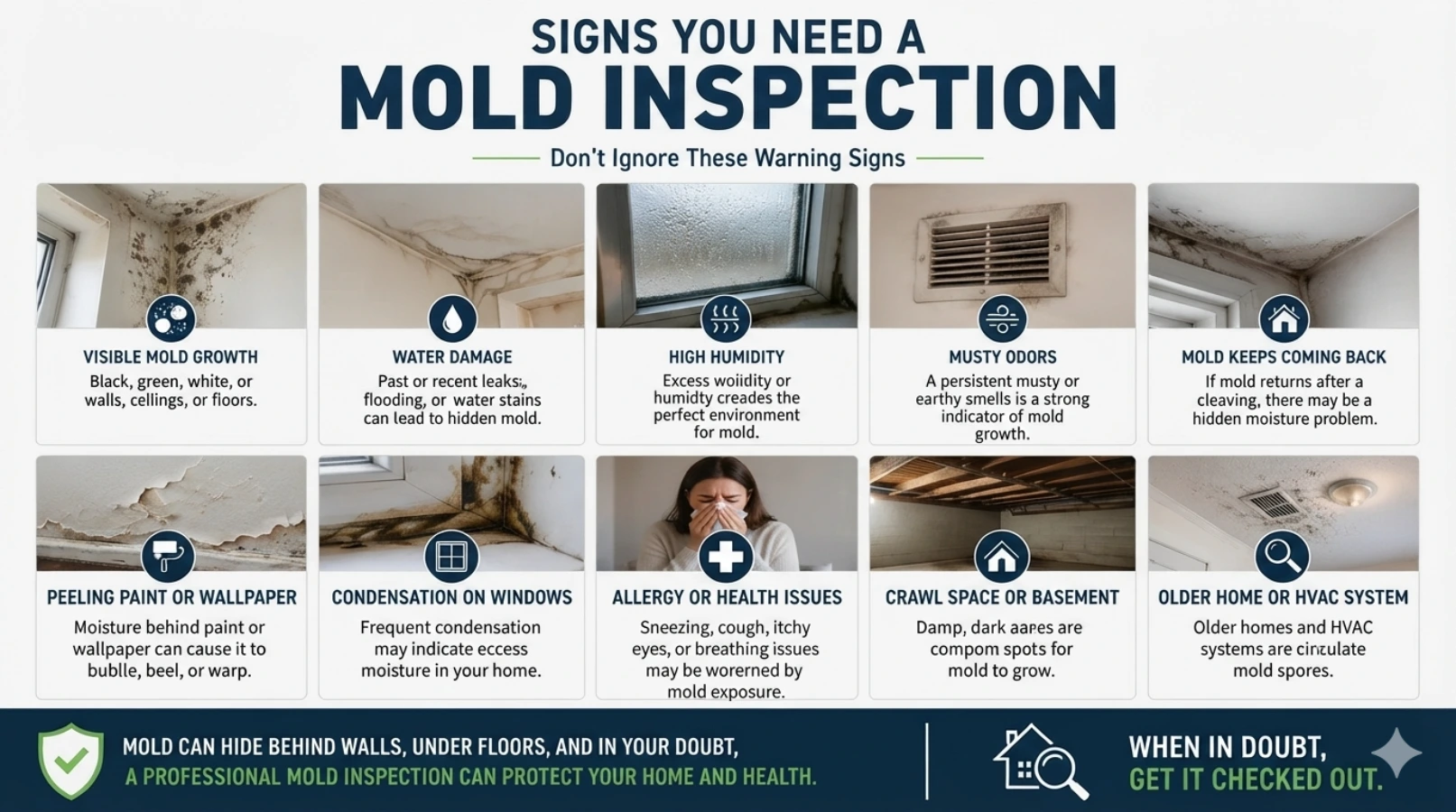
3. Recent Water Damage, Leaks, or Flooding:
Mold needs two things to grow: moisture and an organic food source like drywall, wood, or insulation. A roof leak, burst pipe, slow plumbing drip, or storm flooding is common after Gulf Coast hurricanes and heavy rain events can creates ideal growing conditions almost immediately. Mold can begin colonizing within 24 to 48 hours of a water intrusion, which is why even a “small” leak that was cleaned up quickly can leave hidden mold behind if the structure wasn’t fully dried. Water damage like this is one of the clearest signs you need a mold inspection.
4. High Indoor Humidity or Constant Window Condensation:
Corpus Christi’s humid subtropical climate keeps indoor moisture levels elevated for much of the year. Condensation on the inside of windows, sweating pipes, or a general “sticky” feeling indoors are all signs that relative humidity is too high. The U.S. Environmental Protection Agency recommends keeping indoor relative humidity below 60%, ideally between 30% and 50%, since mold growth becomes far more likely once humidity exceeds that threshold. Persistent condensation is another one of the signs you need a mold inspection sooner rather than later.
5. Unexplained Allergy or Respiratory Symptoms at Home:
Sneezing, coughing, itchy eyes, sinus congestion, or headaches that improve when you leave the house and return once you’re back are a common indicator of hidden mold exposure. This is especially telling if multiple people in the household notice the same pattern, or if someone with asthma or a compromised immune system suddenly has worsening symptoms indoors. Peeling Paint, Bubbling Wallpaper, or Warped Drywall.
Paint that bubbles, peels, or cracks for no obvious reason, or wallpaper that separates from the wall, usually points to trapped moisture underneath. Warped, soft, or bulging drywall is an even stronger signal — it means water has been sitting inside the wall cavity long enough to damage the material, which is exactly the environment mold needs to thrive.
7. A Musty Odor or Stains in the Attic, Crawl Space, or HVAC System:
Attics and crawl spaces are the most commonly overlooked mold hotspots because homeowners rarely go up there. Roof leaks, poor attic ventilation, and condensation on ductwork can all trigger mold growth that goes undetected for years. If your air conditioner blows a musty smell through the vents, or you notice dark spots around AC registers, the mold may already be circulating through the whole house every time the system runs. Musty HVAC odors are a subtle but important sign — one of the signs you need a mold inspection.
8. Discolored or Musty-Smelling Carpet:
Carpet that has been wet — from a leak, flooding, or even a slow-draining AC condensate line — can trap moisture at the padding level where it’s invisible from above. Circular brown, green, or black stains, or a carpet that smells musty even after cleaning, are signs mold has taken hold in the padding or subfloor.
9. You’re Buying, Selling, or Refinancing a Home:
Real estate transactions are one of the most important times to schedule an inspection. Buyers want assurance the property is safe; sellers want to avoid surprises during the option period that could delay or kill a sale. In Texas, mold assessments often connect to the Certificate of Mold Damage Remediation (CMDR) required under the Texas Mold Assessment and Remediation Rules, which can protect both parties in future transactions and is frequently requested by lenders, insurers, and title companies.
10. Your Home Was Recently Vacant, Sealed Up, or Poorly Ventilated:
A house that sits closed up for weeks during a long vacation, after a hurricane evacuation, or between tenants loses the natural air exchange that helps control indoor humidity. Combined with Corpus Christi’s Gulf humidity, a sealed, unventilated home can develop mold growth surprisingly fast, even without an obvious leak.
How Many Signs You Need a Mold Inspection Before Calling a Professional?
You don’t need all ten. If you recognize two or more of these signs, it’s worth scheduling a professional mold inspection rather than waiting for the problem to become visible or widespread. A licensed inspector uses moisture meters, thermal imaging, and air or surface sampling to find mold that’s growing where you can’t see it, and to confirm whether what you’re smelling or seeing is actually mold before you spend money on remediation. Recognizing these signs you need a mold inspection early can save thousands of dollars in remediation costs.
Frequently Asked Questions:
Q :- How much does a mold inspection cost in Corpus Christi?
Ans :-Most residential mold inspections range from $300 to $800, depending on the size of the home and whether lab testing of air or surface samples is included.
Q :- Can I just use an at-home mold test kit instead?
Ans :– At-home kits can identify what type of mold is present, but they generally can’t tell you whether the level is abnormal or where the source is coming from. A professional inspection with moisture mapping gives a far more reliable picture.
Q :- Is it normal to have some mold in a Gulf Coast home?
Ans:- Trace mold spores exist in nearly every environment. The concern is active, visible growth or elevated indoor spore counts, which point to a moisture problem that needs to be fixed at the source.
Q :- How quickly does mold grow after a leak?
Ans :- Under the right conditions, mold can begin growing within 24 to 48 hours of water exposure, which is why prompt drying after any leak or flood is critical.
These are the signs you need a mold inspection. If you’ve noticed any of these warning signs in your Corpus Christi home, don’t wait for the problem to spread. A professional mold inspection identifies exactly where moisture is entering, how far the growth has spread, and what it will take to fix it for good. For more on how moisture control prevents regrowth, see the EPA mold guidance.